
 Image 1 of 1
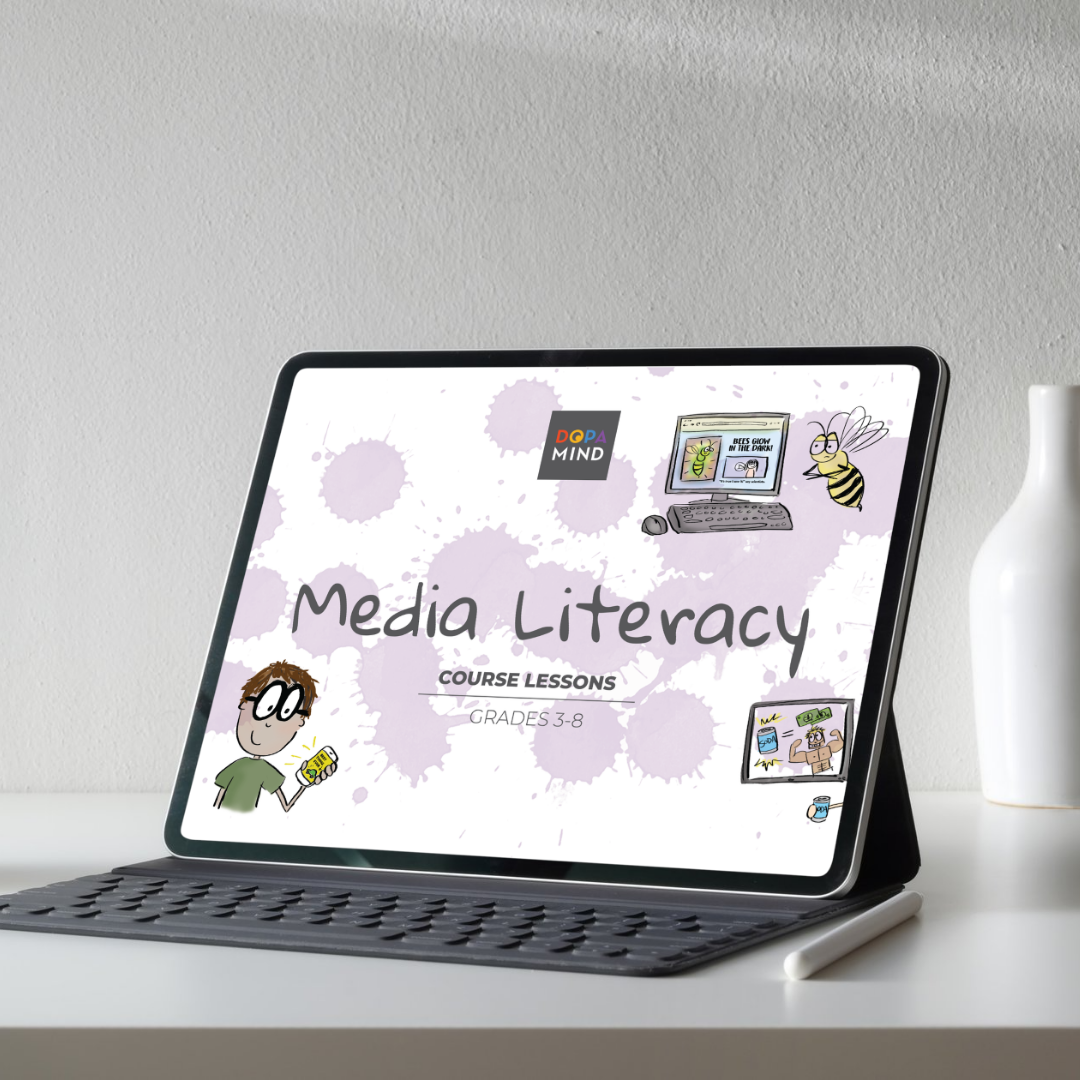
Designed to follow Digital Wellness but equally effective as a standalone unit. Students develop the critical thinking skills needed to navigate today's information landscape — learning to analyze how media messages are constructed, spot misleading content and advertising, and apply a principle of inquiry to everything they see, hear, and share online. Includes 8 presentation slides.
Identify different types of media messages and understand how they are produced.
Understand the verbal, aural, and visual aspects of media messages and how they shape perception of reality.
Differentiate between media sources and producers.
Navigate online content on search engines and websites and learn to differentiate between true and false information.
Understand the principle of inquiry regarding seen, heard, produced, and engaged content.use.
Your purchase supports DopaMind's nonprofit mission — and if cost is ever a barrier, just ask. We believe every student deserves access to this education.
Designed to follow Digital Wellness but equally effective as a standalone unit. Students develop the critical thinking skills needed to navigate today's information landscape — learning to analyze how media messages are constructed, spot misleading content and advertising, and apply a principle of inquiry to everything they see, hear, and share online. Includes 8 presentation slides.
Identify different types of media messages and understand how they are produced.
Understand the verbal, aural, and visual aspects of media messages and how they shape perception of reality.
Differentiate between media sources and producers.
Navigate online content on search engines and websites and learn to differentiate between true and false information.
Understand the principle of inquiry regarding seen, heard, produced, and engaged content.use.
Your purchase supports DopaMind's nonprofit mission — and if cost is ever a barrier, just ask. We believe every student deserves access to this education.